

Description
Product details
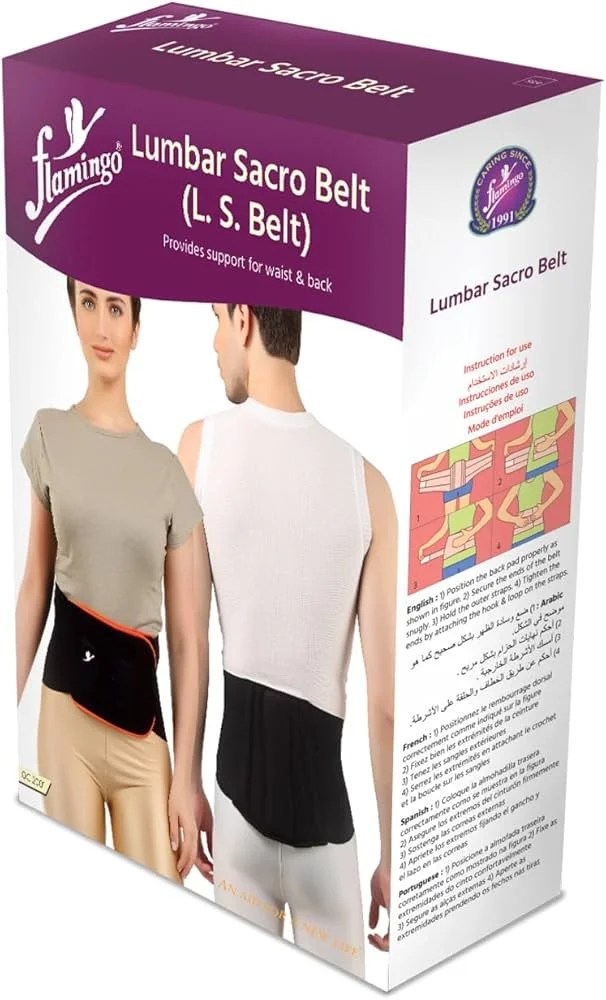
This is a *Flamingo Lumbar Sacro Belt (L.S. Belt)*. *Product category*: Medical / Orthopedic support device. It’s a back brace designed to support the lower spine, lumbar region, and sacroiliac joint. *Key features from the box:* 1. *Provides support for waist & back* - Targets the lumbosacral spine L1-S1 2. *Elastic panels with adjustable straps* - Allows compression and customized tightness 3. *Posterior stays/supports* - Most L.S. belts have rigid or semi-rigid inserts in the back to limit motion and improve posture 4. *Hook & loop closure* - Velcro fastening for easy wear and adjustment 5. *Unisex design* - Shown on both male and female models *How to use - based on instructions shown:* 1. *Position the back pad properly* - Center the wider padded section over your lower back, just above the buttocks. The bottom edge should sit near the top of your hips. 2. *Secure the ends of the belt* - Wrap the main belt around your waist and fasten the Velcro in front, below the navel. It should be snug but not restrict breathing. 3. *Tighten the outer straps* - Pull the secondary elastic straps from back to front and attach them to the main belt. This increases compression and support. Adjust for comfort. 4. *Check fit*: You should feel firm support without skin pinching, numbness, or difficulty breathing. Wear over a thin cotton T-shirt to prevent skin irritation. *Common uses:* - *Lower back pain* - From muscle strain, sprain, or overuse - *Lumbar spondylosis or disc issues* - Reduces motion and load on discs - *Posture support* - During prolonged sitting, standing, or lifting - *Post-operative care* - After certain spinal surgeries, if prescribed - *Sacroiliac joint pain* - Stabilizes the pelvis *Important*: An L.S. belt is a support, not a cure. Long-term or continuous use can weaken core muscles if you rely on it instead of strengthening them. It should be used intermittently during activities that aggravate pain. Do not use if you have: abdominal hernias, severe osteoporosis, fractures, skin infections, or if you’re pregnant, unless your doctor approves. Tight belts can increase intra-abdominal pressure and aren’t suitable for everyone. For persistent back pain, numbness, tingling, weakness in legs, or bladder/bowel issues, consult an orthopedic doctor, spine specialist, or physiotherapist. They’ll decide if a belt is appropriate and guide you on core strengthening exercises. Want tips on how many hours a day it’s safe to wear and when to wean off it?