

Description
Product details
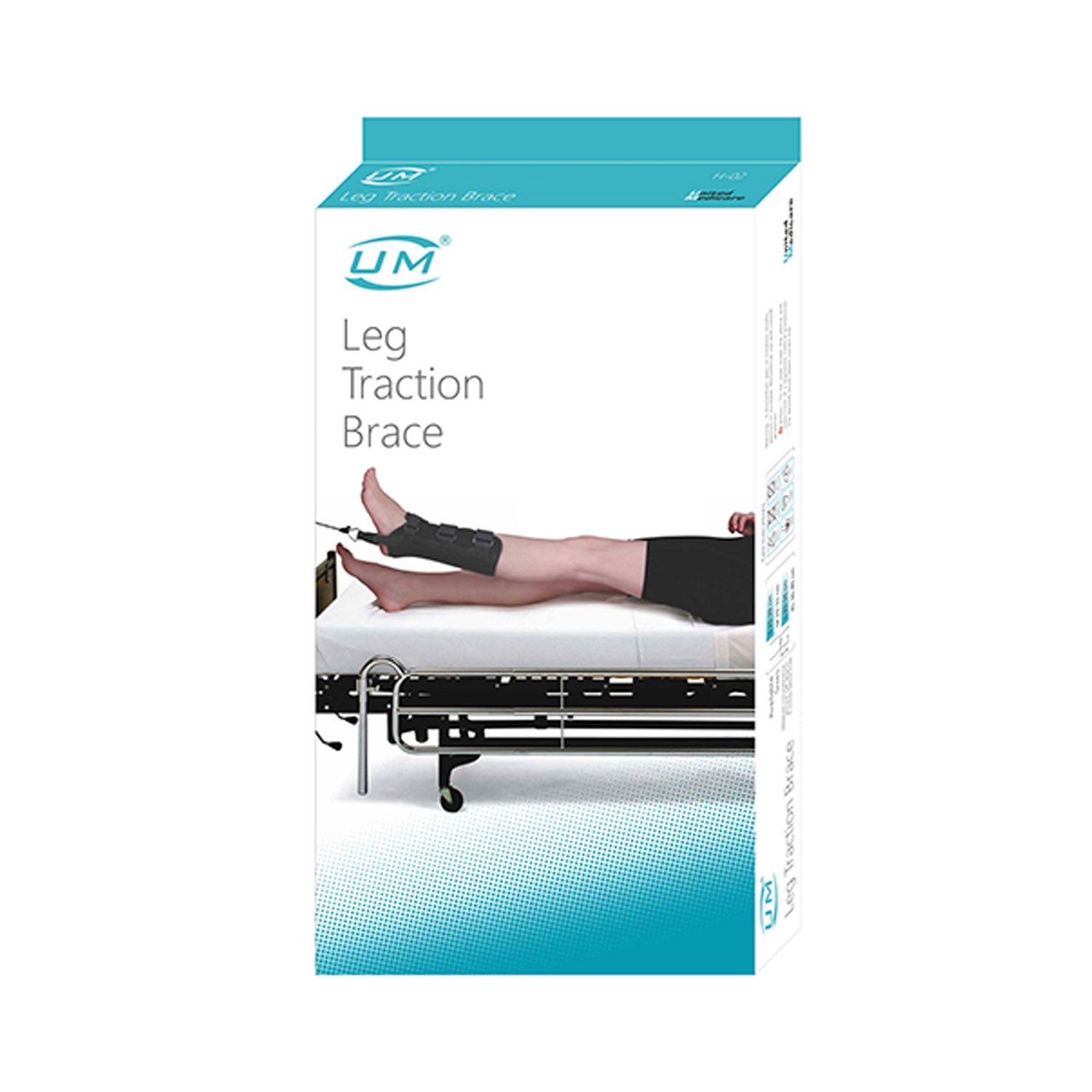
This is a *UM Leg Traction Brace* by United Medicare. *Product category*: Medical / Orthopedic & rehabilitation device. It’s a skin traction kit used to apply a steady pulling force to the leg, usually for fracture management, pre-operative care, or pain relief. *Key parts shown on the box:* 1. *Ankle/foot brace* - Black padded cuff with straps that wraps around the lower leg/ankle 2. *Spreader bar & cord* - Attaches to the brace and connects to a traction weight system 3. *Setup* - Patient lies on bed, brace on leg, cord runs over pulley at foot of bed to weights *How traction braces work - general principle:* Traction pulls the leg to align bones, reduce muscle spasm, relieve pressure on joints, and immobilize fractures. This type is *skin traction*, meaning force is applied via the skin, not pins in bone. *How to use - general clinical steps:* 1. *Prescription only*: Weight, duration, and setup are decided by an orthopedic doctor. Never self-apply. 2. *Apply brace*: Skin should be clean, dry, and checked for wounds. The padded brace is wrapped around the calf/ankle and secured with Velcro straps. It should be snug but not cut off circulation. 3. *Connect traction*: The cord from the brace runs over a pulley fixed to the bed frame. Prescribed weights are attached to the end of the cord. 4. *Position*: Patient lies flat. The bed’s foot is often elevated to provide counter-traction. The line of pull must stay straight. 5. *Monitoring*: Check every 2-4 hours for skin breakdown, numbness, tingling, color change, or increased pain. Ensure weights hang free and don’t touch the floor. *Common uses:* - *Temporary management of hip/femur fractures* before surgery - *Reduce muscle spasm* and pain in hip/knee conditions - *Maintain alignment* in certain dislocations *Important*: Traction is a medical procedure with serious risks if done wrong. Complications include pressure sores, nerve damage, DVT, skin breakdown, and peroneal nerve palsy if too tight at the ankle. The amount of weight, angle of pull, and duration must be prescribed and supervised by an orthopedic surgeon or trained physiotherapist. This is *not* for home use without medical training. For any fracture, severe leg pain, or post-surgery care, follow your doctor’s protocol exactly and report problems immediately. Want me to explain the difference between skin traction like this vs skeletal traction?